





Design and build procurement route

|
|
Key takeaways: The Design and Build (D&B) procurement route is a project delivery method where a single contractor is responsible for both design and construction. This approach streamlines project management, often leading to faster completion and better cost certainty. It is the most commonly used procurement method in the UK, accounting for over 50% of projects. While D&B offers a single point of responsibility, it can limit client control over design details. It is ideal for projects where speed, efficiency, and cost control are priorities, but may not suit those requiring highly customised design input. |
[edit] What is the design and build procurement route?
Design and build is a procurement route in which the main contractor is appointed to both design and then construct the works described in the contract. This is as opposed to the traditional procurement route, in which the client first appoints consultants to design the development and then a contractor is appointed to construct the works.
Design and build can be seen as giving a single point of responsibility for delivering the entire project. Some clients, however, consider it is only appropriate for simple projects, where design quality is not the main consideration.
The traditional procurement route was historically the most commonly used procurement route, but there has been an increasing trend for contractors to take a more significant role in setting up projects, making appointments and managing the entire project process. This began with the introduction of design and build, which became popular in the 1980s.
[edit] How popular is the design and build procurement route?
The Procurement Trends Report, published by Ryder Levett Bucknall (RLB) in 2024, found that 67% of projects now use design and build forms of contract, the highest proportion recorded since RLB's survey began. This builds on the trend identified in RLB's March 2022 survey, in which design and build accounted for 54% of projects, and confirms design and build as by far the most commonly-used procurement route in the UK.
[edit] How does the design and build procurement route work?
The employer gives potential contractors their 'employer's requirements' setting out what they need from the project, and the contractors respond with 'contractor's proposals', which include a price for the works.
The contractor can either be appointed to carry out all of the design work, or if the client wishes to have greater influence over the design, a concept design and outline (or performance) specification can be prepared by a consultant employed by the client, and then the contractor is appointed to complete the design and carry out the construction.
The contractor may use their own in-house designers to design the building, or they can appoint consultant designers, or the client's designers can be employed by the contractor to complete the design (either by novation or consultant switch).
Design and build contracts can be awarded on a fixed price, lump sum basis, but price certainty is then dependent on not making any subsequent changes as these could prove to be expensive (as prices charged by the contractor for those changes will not be subject to competition).
It is very important therefore that the client gives a great deal of consideration to the preparation of the employer's requirements, and if they have not appointed their own design team, they may wish to appoint independent client advisers to help them do this. Similarly, if any designers appointed by the client are novated or switched to work for the contractor, the client may then wish to appoint independent client advisers to review contractor's design proposals, administer the contract and monitor works on site.
[edit] What are the different types of design and build?
There are two main types of design and build:
- Single stage design and build.
- Two-stage design and build.
[edit] What is single-stage design and build?
In the single-stage process the contractor is appointed under a single agreement to undertake the design and then construct the works. Single-stage tendering is used when all the information necessary to calculate a realistic price is available when tendering commences.
[edit] What is two stage design and build?
In a two-stage process the contractor is first selected on the basis of a fee, preliminaries, overheads and profit. They then work with the design team (who may be employed either by the contractor or by the client at this stage) to develop the design, on the basis of which a fixed price is negotiated for the second stage; construction, when the design team may be novated to the contractor if the contractor does not already employ them.
For more information see: Two-stage tender.
[edit] When should the design and build procurement route be used?
The design and build procurement route should be used:
- Where there is a need to make an early start on site – as design and construction can overlap.
- Where the client wishes to minimise their risk – as they have no responsibility for design.
- For technically complex projects which can benefit from the contractor's expertise in the design stage.
- Where the employer does not want to retain full control over the design development.
- Where the client wishes to have a single point of responsibility.
[edit] What are the advantages of the design and build procurement route?
Advantages of the design and build procurement route include:
- A single point of responsibility for design and construction.
- Earlier commencement on site.
- Early price certainty.
- The benefit of the contractor's experience during the design stage.
[edit] What are the disadvantages of the design and build procurement route?
Disadvantages of the design and build procurement route include:
- The client may find it hard to prepare a sufficiently comprehensive brief to ensure the design meets their requirements.
- The client has to commit to a concept design early in the project development.
- Variations from the original brief can be difficult and expensive to arrange.
- It can be difficult to compare tenders and determine if they offer value for money.
- Ease of fabrication, speed and low cost may be prioritised by the contractor above aesthetic quality.
See also: Design and build - pros and cons.
[edit] What types of contract can be used for the design build procurement route?
Design and build contracts include:
- Joint Contracts Tribunal (JCT) Design and Build Contract 2024 (DB 2024) (also JCT Major Project Contract and JCT Constructing Excellence Contract). DB 2024, published in April 2024, replaces the previous JCT DB16 edition and is the current standard form for design and build projects; it incorporates the dutyholder regime introduced by the Building Safety Act 2022, including provisions to identify the principal designer and principal contractor and references to Part 2A of the Building Regulations.
- The Association of Consultant Architects ACA/2.
- Government Contracts GC/Works 1 (single stage or two stage) (NB: GC Works contracts are no longer being updated by the government).
- Institution of Civil Engineers (ICE) Design and Construct (this has now been withdrawn in favour of the NEC suite of contracts).
- The New Engineering Contract (NEC) Engineering and Construction Contract:
- NEC3.
- NEC4 (the current edition, published in 2017, and now the most widely used).
- NEC4 DBO.
[edit] Notes
- A design and build contract may also be referred to as a contractor designed contract. This should not be confused with contractor's design portion.
- 'Develop and construct' is a variation on design and build, in which most of the design is completed before the contractor is appointed. This avoids some of the potential problems of design and build, but also misses some of the opportunities.
- In the context of the UK Building Safety Act 2022, design and build arrangements raise particular dutyholder considerations. Where the contractor is appointed to complete or take over the design, it is often the contractor, rather than the client's original design team, that is appointed as principal designer under Part 2A of the Building Regulations (as well as, in many cases, principal contractor), bringing design and construction responsibility together within a single organisation. The JCT Design and Build Contract 2024 reflects this by requiring the parties to identify the principal designer and principal contractor in the contract particulars, and by referencing Part 2A of the Building Regulations. Clients and their advisers should ensure the appointed principal designer has genuine design competence and real influence over the design, and is not merely a nominal role.
[edit] Related articles on Designing Buildings
- Procurement route.
- Design and build - pros and cons.
- Traditional contract for construction.
- Design and manage procurement route.
- Procurement route options pros and cons.
- Single-stage tender.
- Two-stage tender.
- Employer's requirements for building design and construction.
- Contractor's proposals for building design and construction.
- Employer's agent for design and build.
- Novation.
- Consultant switch.
- Contractor's design portion.
- Construction contract.
- Fixed price construction contract.
- Lump sum contract.
- JCT.
- NEC4.
- Design and build: outline work plan.
- Design and build: tender.
[edit] External references
- Guide to DB11, Sarah Lupton, RIBA Publishing, 2011.
- Procurement Trends Report, Ryder Levett Bucknall (RLB), 2024.
- JCT Design and Build Contract 2024 (DB 2024), The Joint Contracts Tribunal.
Featured articles
Check out some of the best features and news from Designing Buildings as well as key stories from around the web.

ECA warns growth must not outpace grid capacity or skills.
The role of the client and decision making

CIOB response to built environment professions call for evidence.
Construction's sustainability reporting revolution
Tracking upfront embodied carbon with digital tools.
ECA welcomes procurement reforms

Public spending must back British jobs and skills.
Campaigning for Edinburgh: the Cockburn Association 1875-2049

The role of the civic voice in protecting character. Book review.

CIOB photography competition is open for entries.
ECA Edmundson apprentice of the year award
Finalists announced.
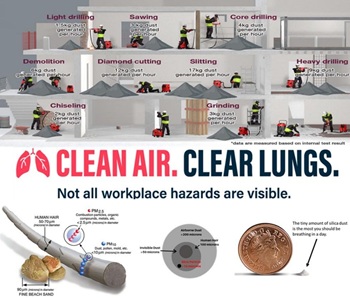
Major new study exposes serious knowledge gaps.

Generating energy from internal light as well as sunshine.

ECA welcomes plans to strengthen subcontractor quality control.

Combining mid-career qualifications with experience broadens career opportunities.

Why being a mentor can help your career.
Comments
To make a comment about this article, click 'Add a comment' above.
Separate your comments from any existing comments by inserting a horizontal line.
What a useful and detailed website this is. Thank you!